
website planning
A 10 step learning path: start with the how-to, then use the checklist, worksheet and examples, and finish by measuring results and avoiding common mistakes.
Step 1 · How-to
Website Planning: Practical Guide
Define what a website must help visitors do before design or development begins. A narrow first pass makes it easier to see whether the method works before applying it more widely.
Step 2 · Checklist
Website Planning: Checklist
Use this website planning checklist before a new release, a handoff, or a scheduled review. Its purpose is to verify the decisions that affect priority visitor tasks supported. Check an actual page or interaction record; a box marked complete without evidence does not show that the customer journey works.
Step 3 · Worksheet
Website Planning: Template and Field Guide
This website planning template turns a broad task into a record another person can use. It captures audience, task, page, then connects that information to a decision. Copy the table into your working document or system and create a separate record for each item in scope.
Step 4 · Examples
Website Planning: Worked Examples
The following website planning examples illustrate how to move from an observed problem to a practical decision. They are hypothetical operating scenarios, not customer results or performance benchmarks. The central question is whether the work helps improve priority visitor tasks supported without losing the context needed to judge it.
Step 5 · Procedure
Website Planning: Team Workflow and Handoff
A team workflow for website planning needs more than a list of tasks. Each person should know what to receive, what to produce, and what evidence allows the next person to continue. Use the procedure below to make responsibilities explicit and keep priority visitor tasks supported connected to the work.
Step 6 · Automation
Website Planning: Automation Workflow
A website planning automation workflow should handle repeatable preparation and record movement while preserving the decisions that require context. Start by defining a reliable trigger around a page or interaction record. Then specify the required information, the permitted action, and what happens when the conditions are not met.
Step 7 · Prioritization
Website Planning: How to Prioritize the Work
Prioritize website planning work by connecting an observed problem with the people or business outcomes it affects. The objective is to define what a website must help visitors do before design or development begins. Give the team a short ordered queue with a reason for each decision, rather than treating every suggestion as equally urgent.
Step 8 · Evaluation
Website Planning: Review Process
A useful website planning review ends with a supported decision for each item examined. Define the evidence required before opening the report: audience, task, page, function, owner. These fields give reviewers a shared basis for agreeing what is working, what needs attention, and who should act.
Step 9 · Measurement
Website Planning: Metrics and Measurement
Measure website planning by defining priority visitor tasks supported precisely enough that two people can reproduce the result from the same records. Keep the reporting unit, date basis, and scope visible. Without those definitions, a change in the report may reflect a changed calculation rather than a changed customer outcome.
Step 10 · Mistakes
Website Planning: Mistakes and How to Fix Them
A common failure in website planning is starting visual design before the business goal is clear. The consequences often appear later, when someone tries to act on incomplete or misleading information. This guide explains how to recognize the failure, correct the immediate problem, and prevent it from becoming a repeated working practice.
The offer
AgentixHUB: Your agency's AI command center
- Scout AI assistant. Ask in plain words. Scout researches, plans and acts across every Agentix product.
- Approve every change. Scout drafts the work. You approve it before anything touches a client account.
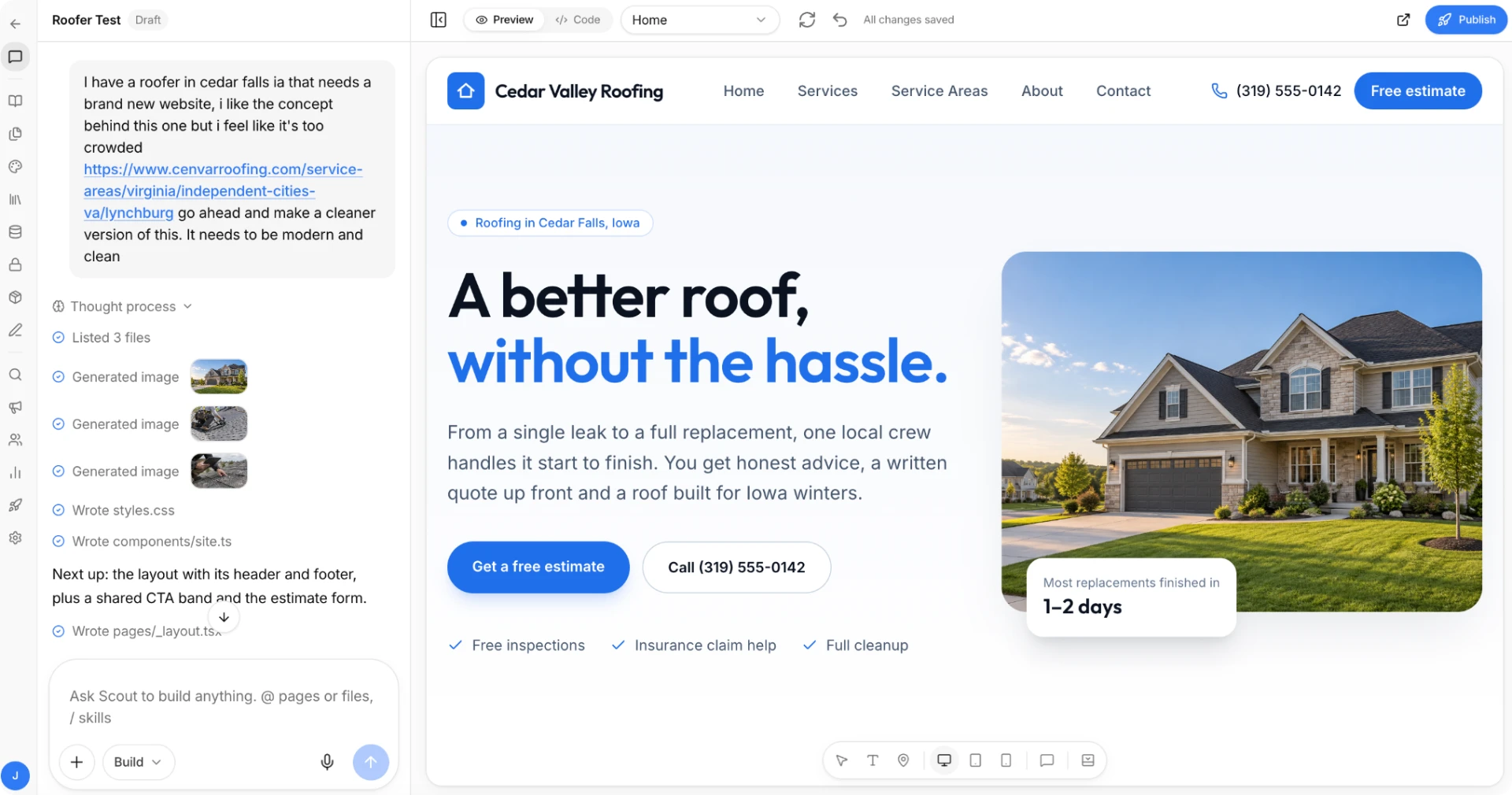
- Site Studio. Build or redesign client websites and landing pages from a prompt.
HUB plans from $79/mo
Tell Scout what your client needs and AgentixHUB builds the site, landing pages and apps for you to approve.
Start now Or talk to salesBefore you buy
Questions agencies ask.
Run website planning for every client.
Build client websites, landing pages and full applications with Scout, all under your agency brand.
HUB plans from $79/mo